A smart reseller tries to remove uncertainty before spending money. The point isn't to predict a perfect sale price; it's to build a decision you can explain to yourself even if the item doesn't sell as hoped.
Pause and identify the object
Find its exact model, maker, edition or important identifying marks. Beautiful color, age or patina alone is not a reliable valuation method. If the identification is unclear, treat the purchase as speculative.
Ask what is missing or broken
Look for accessories, damage, basic function, odors and safety issues. Missing proprietary parts, untested electronics and fragile items can be more expensive than the original price tag suggests.
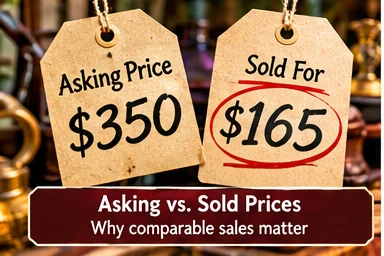
Find sold comps, not wishful listings
Search for the closest available closed sales, note how closely they match, and choose a realistic sale range. When you only find unsold asking prices, your confidence should stay low.
Run the whole cost stack
Include the tagged purchase price, platform fees, all shipping charged and paid, packing, repair and other likely expenses. Then calculate break-even and projected dollar profit—not just percentage ROI.
Know your pass number
Define a minimum dollar profit and a maximum loss you are comfortable risking before you negotiate. If evidence is weak, shipping is uncertain or time-to-sell is likely long, a tempting find can still be a pass.